Office Clearance in Mortlake

Office clearance in Mortlake calls for a careful, organised approach that removes redundant furniture, office equipment and general contents without turning the process into a disruption. We provide a clear, practical service for workplaces that need rooms emptied, layouts changed or surplus items taken away in a controlled way. The emphasis is on keeping the process straightforward: identifying what stays, what goes and how the work can be handled with as little interruption as possible.
Our office clearance service is suited to a range of commercial settings, from smaller workspaces to larger premises with multiple rooms. It can include desks, chairs, filing cabinets, shelving, fixtures, boxed materials and mixed office items that have reached the end of their useful life. Where items need separating, we work methodically so reusable pieces, recycling streams and general waste are handled in a sensible order. Clear sorting makes a real difference to efficiency and helps avoid unnecessary handling.
The service is built around a practical outcome: an office space left ready for its next stage, whether that is refitting, reconfiguration, end-of-tenancy handover or a simpler reduction of clutter. If you are planning a clearance, send through a few details and we can help shape the work. For a quicker start, you can also outline the rooms, the items involved and the timing you have in mind before asking for a quotation.
What Our Office Clearance Covers
Office clearances often need more than a simple load-and-go approach. Desks may need dismantling, pedestal drawers may need separating from worktops and storage units may need to be moved through narrow corridors or stairwells. In some spaces, the job also includes lifting unwanted reception furniture, meeting tables, partition pieces or archived materials that have built up over time. The aim is to remove what is no longer needed while leaving the remaining workplace tidy and manageable.
We also deal with mixed office contents where the exact balance of items is not immediately obvious. That might mean a room containing old monitors, printer units, broken office chairs, packaging and surplus stationery all together. In those situations, careful sorting matters as much as lifting and transport. If the premises contain both reusable and disposable items, the work can be planned so the different streams are handled sensibly rather than bundled together.
Some clearances are arranged because a business is changing direction, while others happen after a move, refurbishment or closure. The practical requirements can differ, so the service is adjusted to suit the site and the amount of furniture or equipment involved. Good planning reduces avoidable handling and helps the clearance progress in a steady sequence rather than a rushed one.
Furniture and Equipment Removal

Office furniture removal is often at the centre of the job, especially when a workplace has accumulated items that are too bulky to move by ordinary means. We can remove desks, meeting tables, seating, cupboards and shelving that need clearing from a room, floor or entire premises. Where pieces are modular or partly dismantled, they can be taken apart before removal if that is the most workable approach for the site.
Equipment clearance can be equally important, particularly when office layouts change and certain items are no longer useful. Lifting and removing old printers, monitors, keyboards, cabinets and related items needs care, not only because of weight and size but because the contents may be mixed. The service is therefore centred on orderly removal and sensible handling rather than simply shifting everything at once. This is useful when different items need different end destinations.
In some clearances, the furniture itself is the main issue; in others, it is the amount of equipment crowding the room or storage area. The right approach depends on what is on site and how access works in practice. We handle the clearance itself in a way that supports the wider project, so the office can be left open, safer to use and easier to hand over for its next purpose.
How the Clearance Is Planned
Most office clearances are easier when the work is planned around the actual layout of the premises. A compact suite with open-plan desks may need a different approach from a multi-room office with storage, meeting areas and server-related spaces. Access points, stairways, lift use and the position of bulky items all influence how the work is arranged. A practical plan helps reduce unnecessary repetition and keeps the clearance moving in a sensible order.
When requesting a quotation, it is helpful to note the basic scope of the job and whether particular items need special attention. For example, some offices contain heavy cabinets, awkwardly placed furniture or mixed rooms where storage has built up over time. If there are any restrictions on access, such as tight corridors, loading constraints or shared building rules, those are worth mentioning too. That kind of information helps the quotation reflect the real work involved.
It is also useful to identify whether the clearance is for one room, several rooms or a larger workplace with different use areas. That does not mean every item must be itemised in advance, but a clear description of the main contents makes the process smoother. A short written overview, plus a few photographs if available, can support a more accurate discussion of the work without adding unnecessary complexity.
Sorting, Recycling and Responsible Disposal
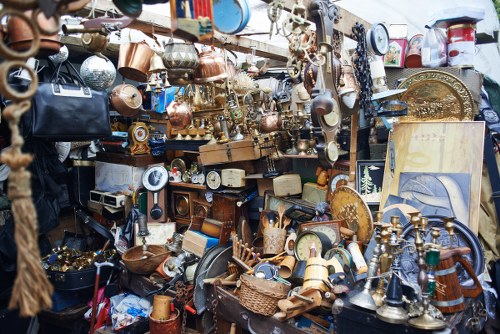
Office clearance often involves a wide mix of items, and not all of them should be treated the same way. Some items may be suitable for reuse, others for recycling and some for disposal as general waste. A sensible clearance plan separates these streams where possible, which helps the process remain orderly and avoids treating every item as if it had the same end point. That is especially useful when a workplace contains furniture, stationery, packaging and electrical equipment together.
Responsible disposal is about more than simply removing items from the premises. It means considering how materials are handled and ensuring the clearance reflects the type of contents involved. Cardboard, metal frames, wood-based furniture and office plastics may each require different treatment. Even within the same office, there can be items with very different handling needs, so the work is organised with that variety in mind rather than applying a one-size-fits-all method.
Where items are suitable for reuse or recycling, keeping them distinct from general waste can make the whole clearance more efficient. It can also reduce the feeling that a workplace has simply been emptied in a rush. For customers, that tends to produce a clearer result: the office is cleared properly, the remaining items are left in place and the job is completed in a way that feels structured rather than improvised.
Office Clearance for Different Workplace Changes
Office clearance can support several stages in the life of a workplace. Some customers need help before refurbishment, when furniture has to be removed to make space for contractors. Others are preparing for a move and want the outgoing office cleared once equipment has been relocated. There are also situations where a business is simply reducing its footprint and needs surplus rooms emptied so that the remaining space can be used more effectively.
These situations differ in timing and detail, but the underlying requirement is similar: the office must be cleared in an orderly way, with the right items removed and the rest left alone. In a refurbishment scenario, timing around building work may matter. In a move, the focus may be on removing left-behind furniture and smaller contents. In a reduction or reorganisation, the emphasis may be on selective removal rather than a complete emptying of the premises.
Whatever the reason, the practical challenge is usually to keep the process controlled. A clear office clearance helps avoid mixed piles, protects the items that are staying and leaves the workplace ready for the next stage. That makes the service useful not only for large clear-outs but for careful, staged changes as well.
Preparing for a Quotation
For a quotation to be useful, it helps to understand the scale of the clearance and the type of contents involved. A simple outline of the office size, the number of rooms and the main items to be removed is often enough to begin with. If the job includes heavy furniture, awkward access or items that need to be dismantled, those details should be included too. The aim is to make the scope clear without overcomplicating the first enquiry.
If you already know the timing, it is sensible to mention it early. Some office clearances are linked to end dates, handovers or project milestones, so the schedule can matter as much as the contents. A few photographs can also help where the room is difficult to describe in words, although they are not always essential. They simply make it easier to judge how the clearance might be approached. Clear information at this stage often leads to a smoother arrangement later.
When the quotation is being prepared, there is no need to catalogue every piece of furniture in minute detail unless the site is unusually complex. A practical summary is usually enough: what needs to go, what should remain and whether there are any access constraints. Once those basics are set out, the rest of the discussion can focus on the safest and most efficient way to complete the clearance.
About Mortlake
Mortlake is a riverside district in south-west London, lying on the north bank of the River Thames between Barnes and Richmond. Historically part of Surrey, it developed from an older settlement with strong links to the river and to local industry, including brewing and textile production. The area’s name is often associated with the medieval manor and with the waterside landscape that has long shaped movement, trade and recreation here. Today, Mortlake combines residential streets, local shops and stretches of open river frontage with a quieter character than some of the better-known central districts. One of its most recognisable landmarks is the railway bridge and station area, which connects the neighbourhood with wider parts of London. The riverside path remains an important feature, drawing walkers, runners and cyclists along a route that passes moored boats and broad views across the water. Mortlake Green provides a central open space and a contrast to the denser streets around it, while nearby church buildings and older housing add to the sense of continuity with earlier periods of the area’s history. The district also sits close to the route of the annual boat race course, linking it in the public imagination with long-standing sporting traditions on the Thames. Mortlake’s built environment reflects a layered past: some roads retain a village-like feel, while other parts show the effect of later suburban growth and transport connections. That mix of river, rail, housing and local heritage gives the area a distinct identity within south-west London.
Office Clearance for Smaller and Larger Premises

Not every office clearance involves the same kind of building. Some jobs are centred on compact premises with a single work area and limited storage, while others involve several rooms, support spaces and more complex contents. The service can be adapted to both, with the focus placed on what needs removing and how best to move it. A smaller workspace may require a tidy, selective clearance, whereas a larger one may call for a more structured sequence of removal.
Where the premises are spread across more than one room, the order of work can matter. Clearing storage before open-plan desks, for instance, may make movement easier and reduce the chance of items being left in the way. Likewise, some workspaces have items stored in corners, cupboards or secondary rooms that are easy to overlook if the clearance is not approached systematically. A careful method helps make sure the job is complete rather than only partly done.
Office clearances can also be useful when a business wants to remove only part of what is on site. That could mean surplus chairs, outdated cabinets or a back office that no longer needs to be kept in its current state. In those cases, the service is not about emptying every room but about taking out the items that no longer serve a purpose and leaving the useful working space intact.
Working Around Access, Layout and Building Rules
Commercial clearances often depend on practical site conditions as much as on the items themselves. Access through shared corridors, loading points, staircases or lift systems can affect how the work is handled. Where furniture is large or awkward, it may need to be moved in stages or dismantled in advance. These details are worth considering because they influence the pace and the shape of the clearance from the outset.
Some buildings also have rules that affect how items can be moved or where vehicles can stop. If an office sits within a managed property or shared complex, there may be restrictions that should be noted before the work begins. A sensible clearance plan takes those requirements into account rather than treating the building as though it were open and unrestricted. That way, the process remains controlled and less prone to avoidable delays.
Where the layout is tight, it may be more practical to remove items in a particular sequence instead of trying to take everything at once. That might mean moving smaller contents first, then the larger furniture once the route is clear. Practical sequencing helps protect the remaining parts of the workplace and keeps the clearance organised from beginning to end.
Getting the Office Ready for the Next Stage

An office clearance is often part of a larger plan, whether that involves refurbishment, relocation, handover or a simple reset of the workspace. Once the unwanted items have been removed, the room can be used more effectively and the remaining furniture is easier to arrange. That is one reason customers often look for a clearance that is thorough but not overcomplicated: the result should support the next stage without creating extra work.
The best outcome is usually one where the clearance has been handled in a way that feels consistent and purposeful. Items are removed in order, reusable pieces are separated where appropriate and the remaining space is left ready for its next use. If you are comparing options or planning the timing, it can help to think about the rooms involved, the volume of contents and the access conditions together, rather than as separate issues. That gives the quotation a clearer foundation and helps the work run more smoothly.
If you need office clearance in Mortlake, start by sending a brief outline of the premises and the items involved. We can then discuss the most suitable approach and prepare a quotation that reflects the job properly. Ask for a quotation when you are ready, or simply get in touch with the basic details and we will take it from there.